


Tapas
Andalusian combo: salmorejo, aubergines, flamenquines and tortilla
Read more
Bar El Pozo blog
Guide to rabo de toro cordobés in a bar setting: how it is cooked, what to look for on the plate and how to pair it with wine or beer.
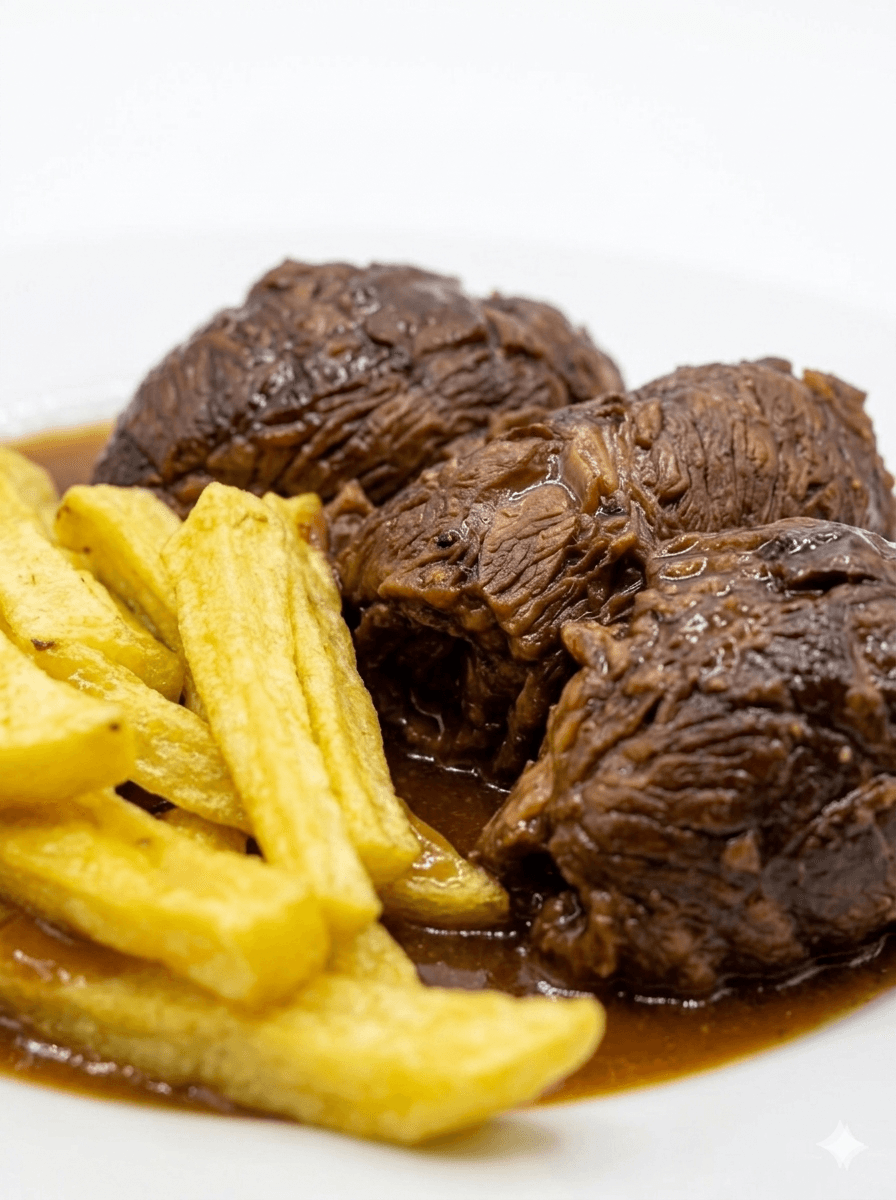
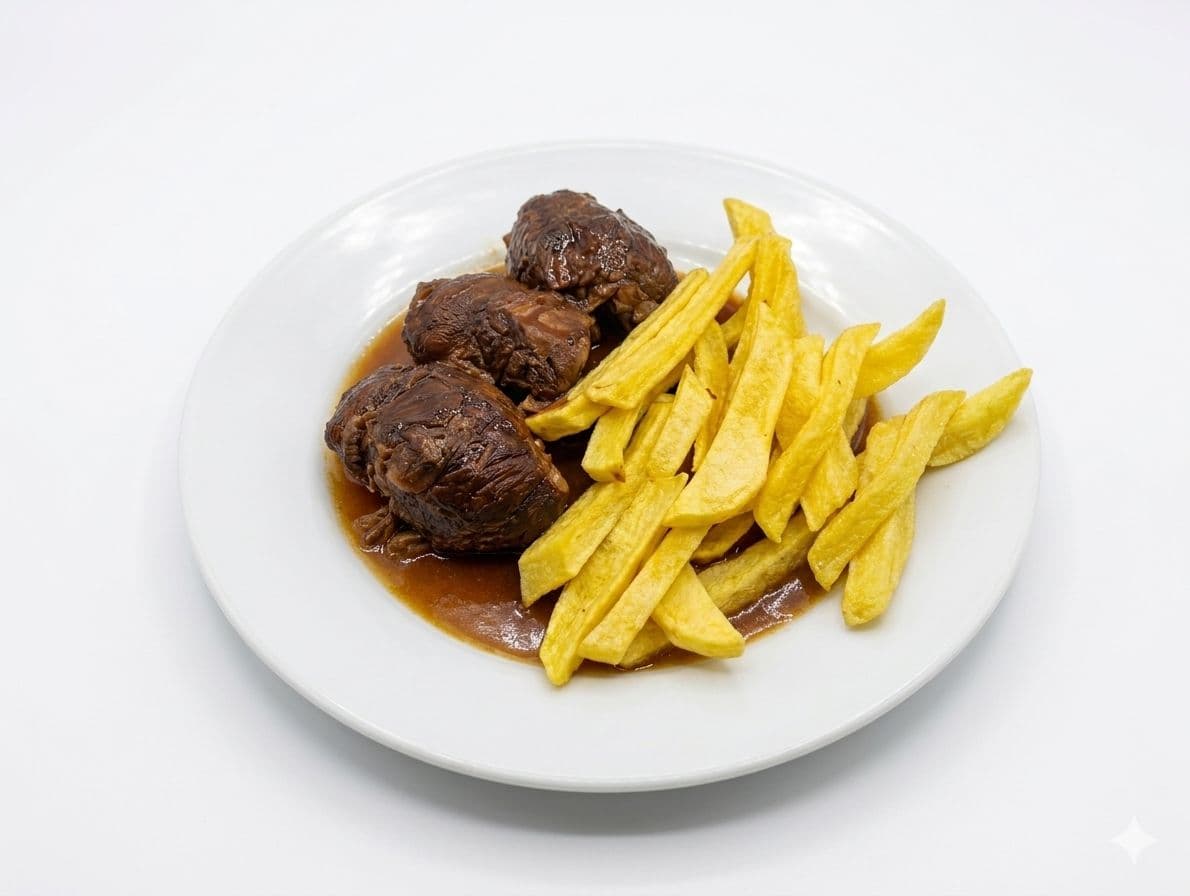
Rabo de toro is one of the dishes many people come to Córdoba for. It is a slow, old stew made from a humble cut that needs time: beef tail cooked for hours in wine, vegetables and stock, until the meat falls off the bone on its own. Done well it is a complete dish. Done badly, you can tell at the first spoonful.
The sauce comes first. It should be dark, glossy, with body — coating the spoon without dripping off. If it is too thin or if a layer of oil floats on top, reduction is missing or there is too much fat left in.
The meat should give way with a fork, no knife needed. The tail has plenty of collagen: when it is cooked properly, that collagen melts and leaves the meat gelatinous, silky. If you have to cut by pulling, it has not had enough time.
The bone is part of the dish. It is served with it so the plating makes sense and so the meat keeps its juices when served. Eating rabo is cleaning bone by bone: that is part of the ritual.
Rabo de toro is not made the same day. The usual approach is to cook it the night before, let it rest in its sauce overnight and serve it the next day. That rest is what brings the flavours together: wine, vegetables and meat settle, and the sauce gets deeper.
That is why in Córdoba bars rabo has a slightly different point each day. Not because the recipe changes, but because the stew evolves with the rest. A Monday rabo and a Thursday rabo do not taste the same even from the same pot.
It is also a dish that holds up well to long cooking. The more time on low heat, the better the texture. That is why it is typical of bar kitchens: it is prepared in advance, served by portions on demand and stays at quality all through service.
It is ordered as a full or half portion. A good full portion fills one person as a main, or splits between two as a second course in a longer meal with other tapas before.
Bread is a must. The sauce asks to be mopped up, and leaving sauce on the plate is almost a waste. Asking for extra bread from the start saves calling the waiter halfway.
For drinks, red wine. A Montilla-Moriles or a young Andalusian red works well. If you prefer beer, a well-pulled cold one also fits: it cleans between bites and does not fight the sauce. White wine does not work: it falls short next to the weight of the stew.
In some bars it appears as a second course on the daily menu. It is a good chance to try it at a reasonable price, but the portion may be smaller than à la carte because it is geared to faster service.
If it is your first time and you are unsure, try it on the daily menu before jumping to a full portion. You get an idea, you decide if you like it, and next time you go straight to the full version with the confidence of knowing what to expect.