



Tapas
Andalusian combo: salmorejo, aubergines, flamenquines and tortilla
Read more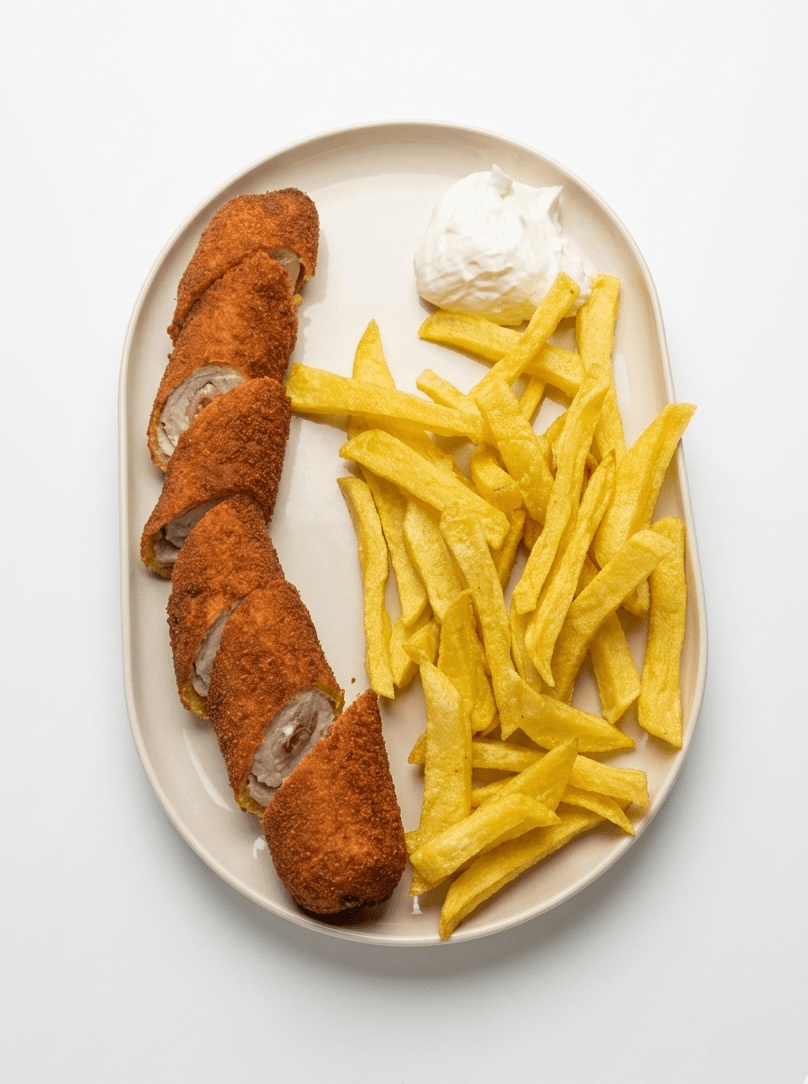
Bar El Pozo blog
Guide to aubergines with cane molasses: how they are made, how to tell a good fry from a bad one, and how to fit them into a Córdoba tapas round.
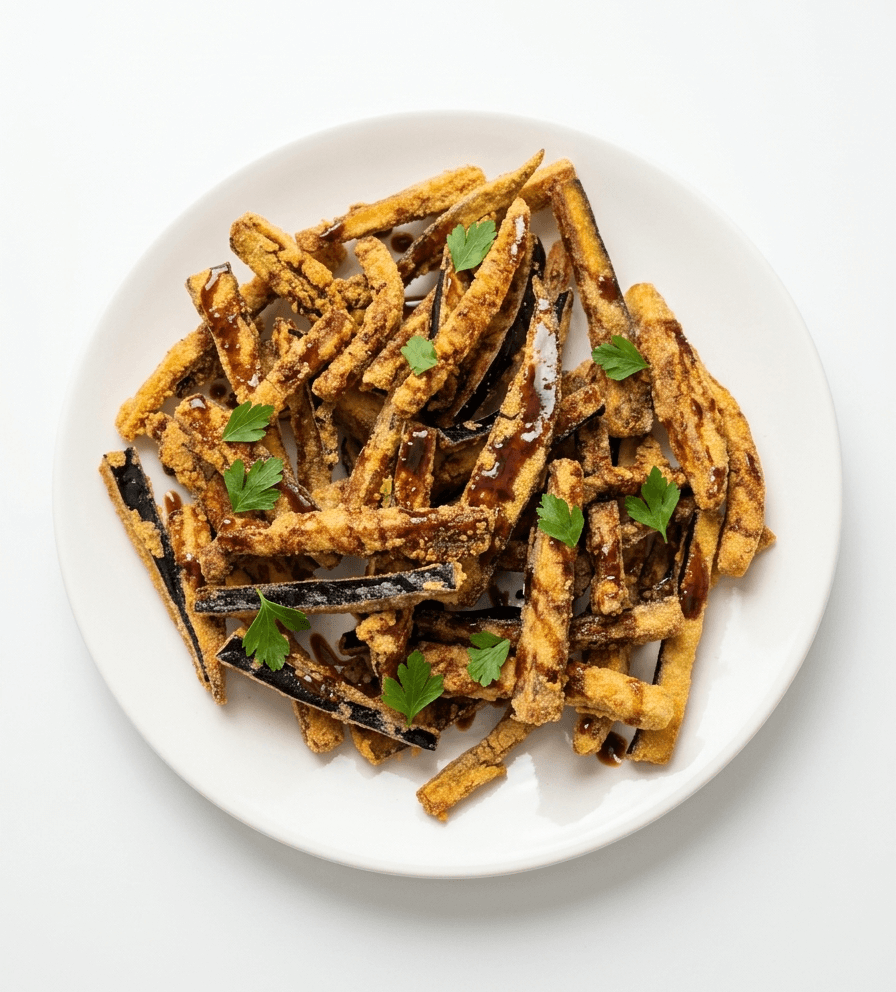
Aubergines with cane molasses are one of those dishes that surprise the first time and then never fail. Aubergine cut into sticks, battered, fried until golden, with a drizzle of dark cane molasses on top. That contrast between the crisp, the salty and the dark sweetness of the molasses is what has turned it into a fixed item on the menu in almost any Andalusian bar. Here is how they are done well, how to tell good ones from bad ones, and how to fit them into a tapas table.
The aubergine is cut into thin sticks, dipped in flour (sometimes with a little egg, depending on the recipe), and fried in hot oil until crisp. Once on the plate, it is drizzled with cane molasses: a dark, dense syrup made from sugar cane.
Cane molasses is not bee honey. It is darker, less sweet, and has an almost liquorice-like background. That difference matters: bee honey, more floral, would cover the dish. Cane molasses adds without overpowering, and that is why it has traditionally been used in Andalusia with aubergine.
Some modern bars swap it for bee honey, agave syrup or reductions. It is not the same. If you want to try the authentic version, look for places that use cane molasses, also called «melaza» in some areas.
The first indicator is the colour. It should be a deep, even gold. If the aubergine looks pale, the oil was not hot enough; if it looks almost black, it burned. Neither is a good sign.
Then the texture. The first bite should crack. Inside, the aubergine should be tender and soft, not oily or rubbery. If the plate arrives limp, it has waited too long between the pan and the table.
And the oil. A good fry leaves no heavy aftertaste and no cold oil pooled on the plate. If the paper underneath is soaked or the plate gleams, the oil was not hot enough.
The right approach is a drizzle on top, not a flood. The molasses needs to be present, not dominant. When the plate arrives soaked, the aubergine loses crispness in seconds and every bite turns sweet without nuance.
The ideal is a thread of molasses at the top, distributed as you eat. That way you control how much sweetness you get per bite: the first sticks can go clean, the middle ones with a little, the last ones with more.
If you prefer it less sweet, ask for the molasses on the side. Many bars serve it in a small dish if you mention it when ordering. For anyone trying the dish for the first time, that option lets you ease in.
They work well at almost any point of the meal, but usually fit best after a cold dish and before heavier fried items or meat. They reset the rhythm and open the palate for what comes next.
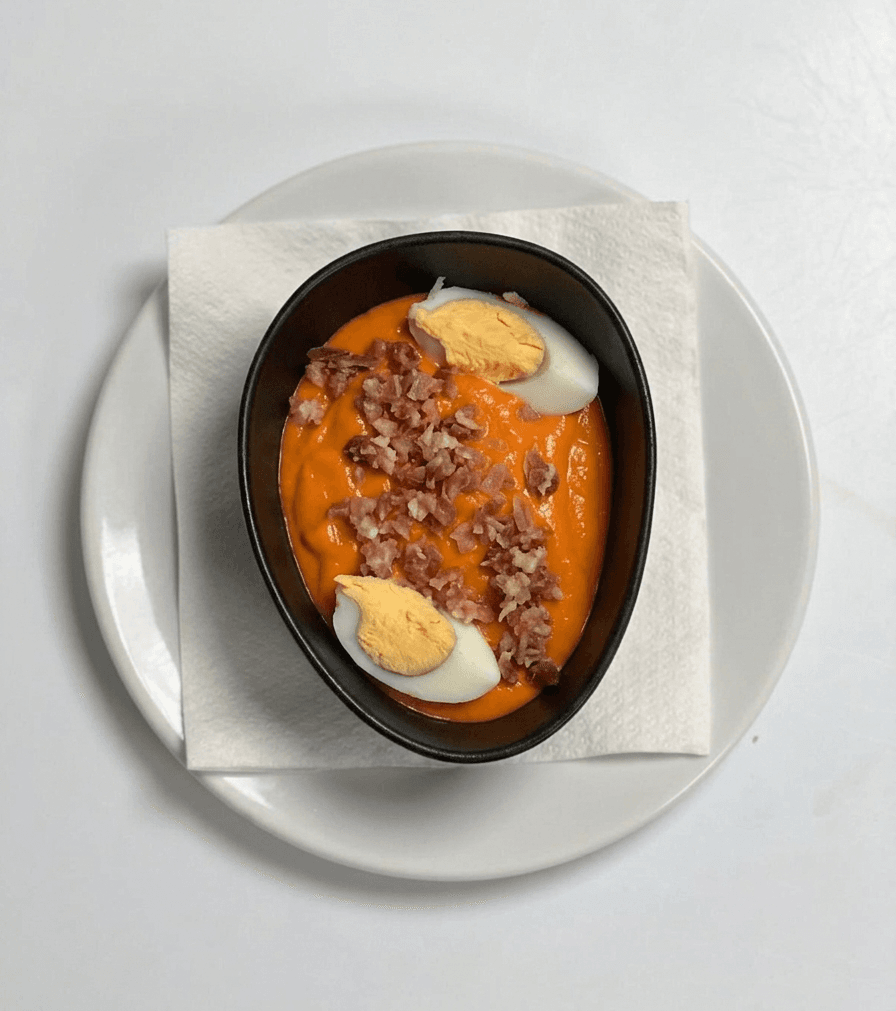
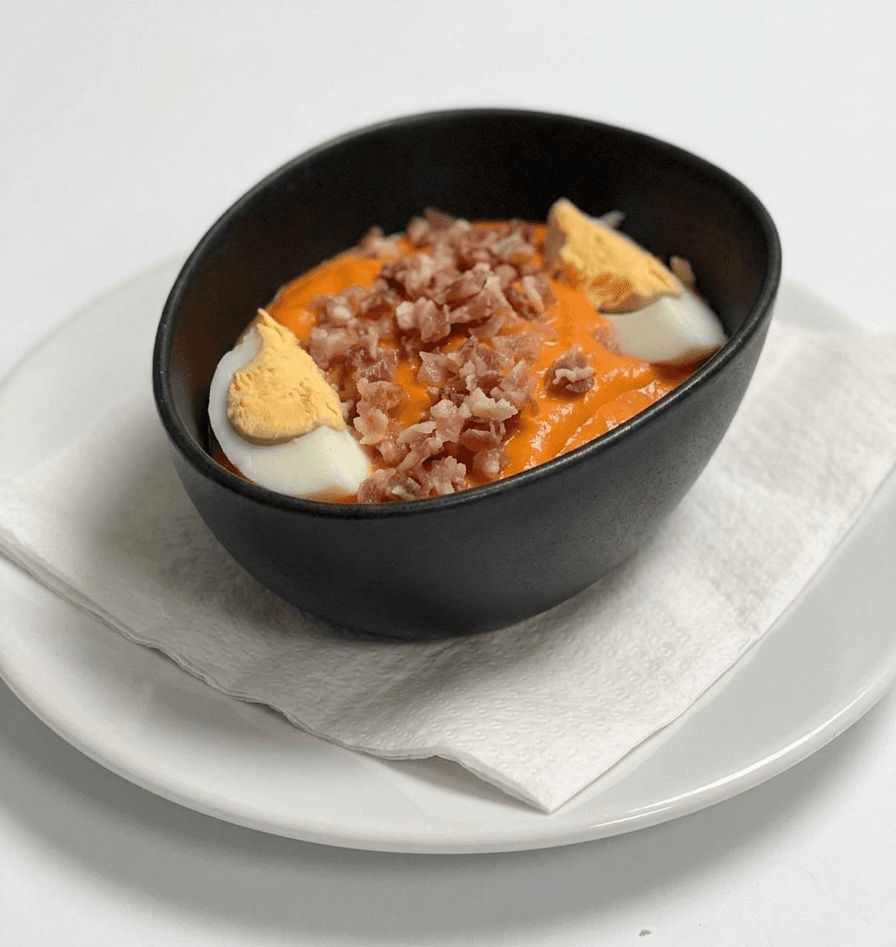
They pair especially well with salmorejo: the cold-hot, sweet-salty contrast between the two is one of the most typical pairings in Córdoba tapas. If you only have to pick two starters, those two are a safe bet.
For drinks, a cold beer is the obvious choice. Young white wine or a fino sherry also work. Heavy reds or very sweet sodas are not ideal: the first clash with the molasses, the second saturate.
The classic batter uses wheat flour, so by default the dish is not coeliac-friendly. Some bars can make a gluten-free version with notice; worth asking.
The dish is usually fried in oil shared with other battered products (squid, fish, croquettes). If you have a fish or shellfish allergy, ask about the fryer before ordering.
Without the molasses and without an egg batter, the base aubergine can be adapted to a vegan diet. Not every bar offers this, but it is worth asking if it matters to you.